Dr. Gymbro
←

#protein intake

4 articles
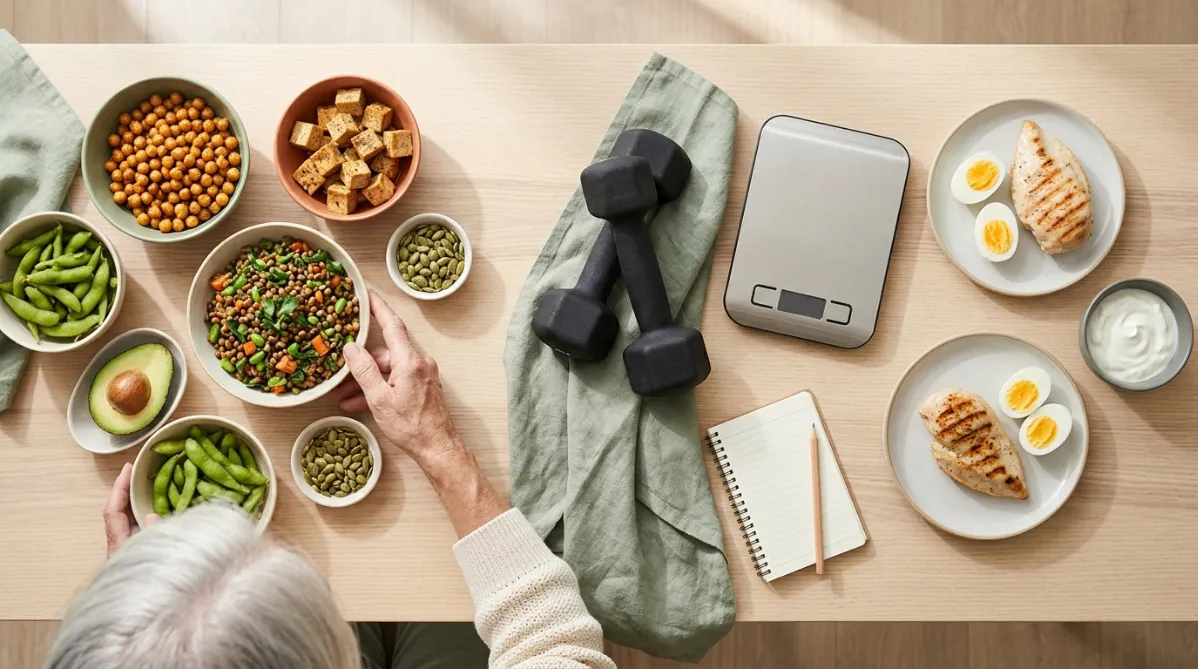
A bright, airy overhead flat-lay on a pale oak table in soft morning light. On the left, a vibrant plant-based protein spread in ceramic bowls: roasted chickpeas, marinated tofu cubes, lentil salad with herbs, edamame, sliced avocado, and a small dish of pumpkin seeds. On the right, a few contrasting items: a simple plate with grilled chicken breast, a hard-boiled egg halved, and a small bowl of Greek yogurt. Between the two sides, a pair of compact, matte-black hexagonal dumbbells rests on a folded sage-green linen towel, with a simple stainless-steel kitchen scale and a small open notebook with a pencil, suggesting tracking protein intake. A pair of weathered, elegant older hands, silver-haired and mid-60s, reaches in gently to pick up a bowl, with a casual cream knit sleeve visible. Natural window light casts soft diagonal shadows across the table. The palette is warm and muted: sage green, cream, terracotta, soft charcoal, with pops of fresh green and orange from the vegetables. Shallow depth of field, crisp focus on the food and dumbbells, gentle blur at the edges. The composition follows a clean editorial style with generous negative space at the top and right for headline text. The overall feel is modern wellness-magazine photography: calm, clean, and inviting, with tactile textures of linen, ceramic, wood, and fresh produce. Landscape 16:9 framing.
nutrition

Vegetarisch ab 55 Jahren? Was eine 108‑Personen‑Kraft‑Studie zeigte

BY DR. GYMBRO ·

Denken Sie darüber nach, das Fleisch hinter sich zu lassen, während Sie in Ihren späten 50ern, 60ern oder noch älter trainieren? Die IMPACT‑Randomized‑Trial mit 108 älteren Erwachsenen zeigte, dass sowohl Vegetarier*innen als auch Omnivoren über 12 Wochen Krafttraining Muskelmasse und Kraft zulegten. Allerdings nahm die vegetarische Gruppe weniger Protein zu (1,24 vs 1,58 g/kg/Tag) und gewann weniger appendikuläre Muskulatur (+0,38 vs +0,66 kg). Die Forschenden konnten nicht nachweisen, dass die vegetarische Ernährung nicht unterlegen ist, und das Muskel‑Ergebnis war statistisch unentschieden. Im Folgenden erfahren Sie, was die Studie tatsächlich zeigt, wo ihre Grenzen liegen und wie Sie Proteinziele setzen, wenn Sie mit einer überwiegend pflanzlichen Ernährung trainieren.
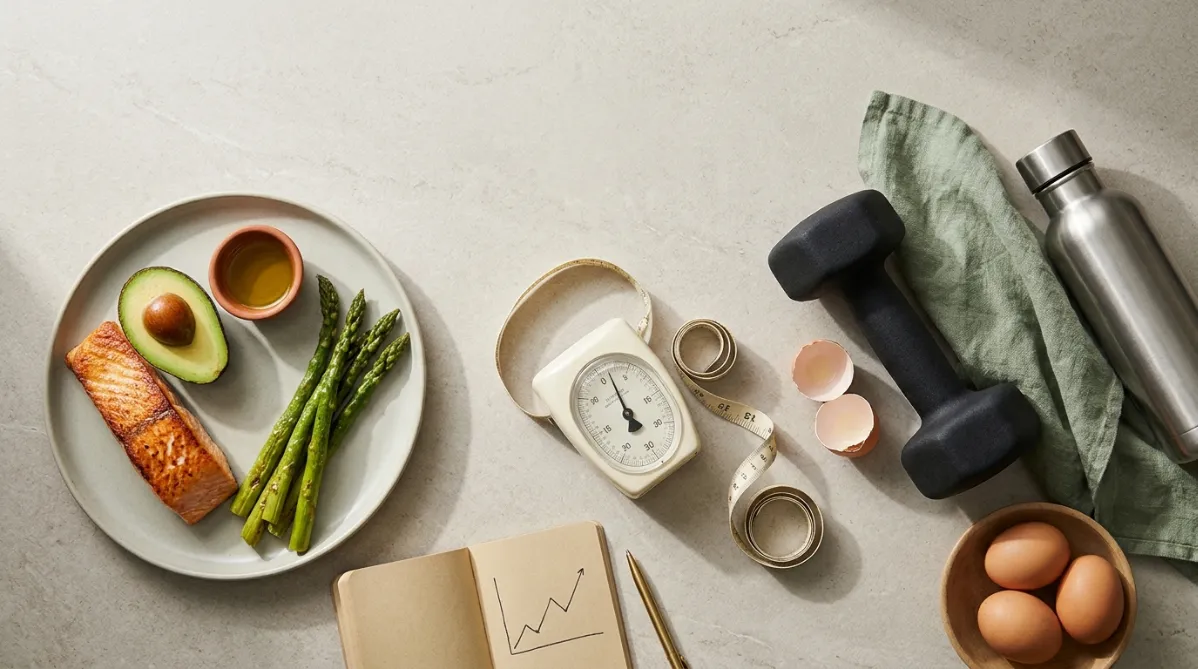
A bright, minimalist editorial flat-lay photographed from above on a pale warm-gray stone countertop in soft natural window light. On the left, a ceramic plate holds a keto-style meal: a seared salmon fillet with crisp skin, half an avocado with a glossy pit, a scattering of bright green asparagus spears, and a small dish of golden olive oil. On the right, a matte black dumbbell rests beside a folded sage-green linen towel and a slim stainless steel water bottle. A raw egg and a few whole eggs in a shallow wooden bowl add a protein cue. In the center, a clean analog kitchen scale and a flexible cream-colored measuring tape curl gracefully in a loose spiral, hinting at body composition tracking. A small open notebook with a minimal hand-drawn line graph, with no legible text, sits at the lower edge with a thin brass pen.

The palette is calm and modern: muted sage green, creamy ivory, warm terracotta accents from a small clay ramekin, and deep charcoal from the dumbbell. Shadows are soft and long, falling diagonally, giving gentle depth. The composition leaves generous negative space at the top and right for title placement. Shallow depth of field, crisp focus on the salmon and dumbbell, subtle film-like grain, and a refined, trendy health-journal look reminiscent of contemporary wellness magazines. Natural, airy, balanced, and slightly editorial, with no people, no text, and no futuristic elements.
nutrition

Schont Keto die Muskeln beim Cutting? Die Daten zur fettfreien Masse überraschen

BY DR. GYMBRO ·

Keto wird oft als muskel‑schützende Methode zum Abnehmen präsentiert, dank der vermeintlichen anti‑katabolen Wirkung von Ketonen. Eine neue Narrative‑Review in *Nutrients* prüft diese Annahme anhand klinischer Daten und kommt zu einem anderen Ergebnis. Ketogene Diäten reduzieren vor allem das Fett, doch Metaanalysen zeigen leicht größere Verluste an fettfreier Masse im Vergleich zu nicht‑ketogenen Ernährungsweisen. Das Problem: DXA und BIA können Muskel von Wasser und Glykogen nicht trennen, sodass der wahre Effekt auf die Muskulatur unklar bleibt. Was das magere Gewebe wirklich schützt, ist die vertraute Dreierkombination aus ausreichender Proteinzufuhr, Krafttraining und einem moderaten Kaloriendefizit.
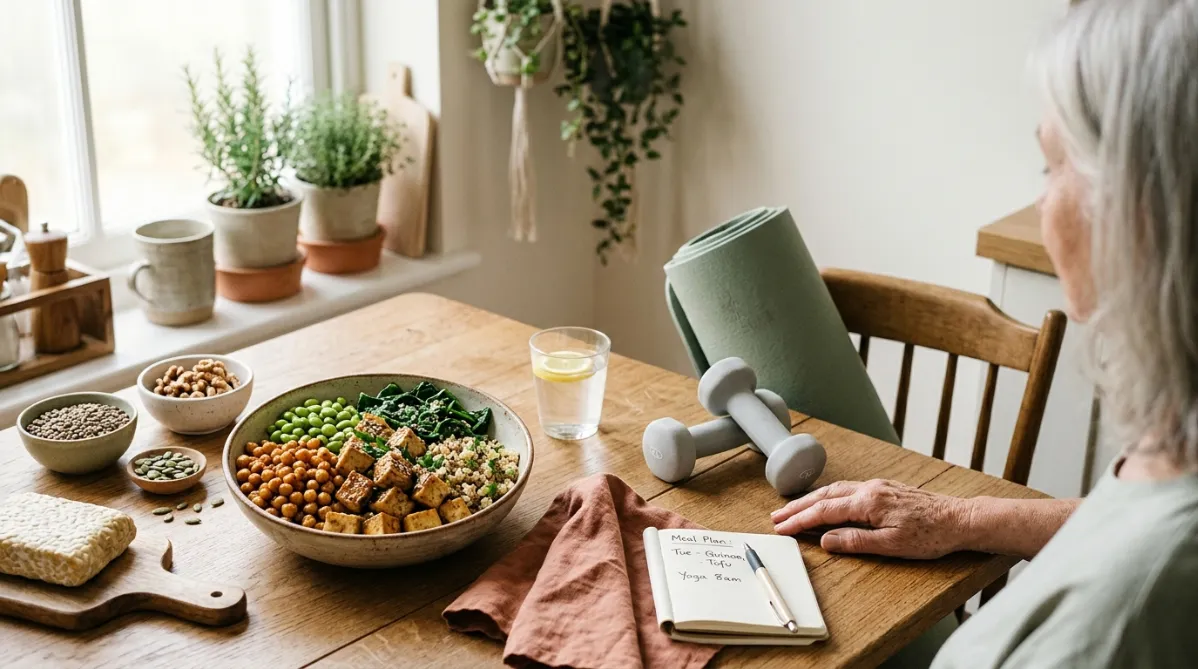
A landscape editorial photograph of a sunlit kitchen table, shot from a slightly elevated three-quarter angle. On the left, a rustic ceramic bowl holds a warm plant-based protein meal: roasted chickpeas, marinated tofu cubes, edamame, quinoa, and wilted greens, topped with toasted sesame seeds. Around it are small dishes of lentils, walnuts, pumpkin seeds, and a block of tempeh on a wooden board. On the right, a pair of weathered hands belonging to an older adult with silver hair, partially visible and softly out of focus, rests beside a pair of light dumbbells and a rolled sage-green yoga mat leaning against a chair. A linen napkin, a glass of water with a lemon slice, and a small handwritten notebook with a pen suggest careful planning. Soft morning light streams through a large window on the left and casts gentle long shadows across the pale oak tabletop. The color palette is muted and earthy: warm cream, sage green, terracotta, soft mustard, and natural wood tones. The background has shallow depth of field, with blurred shelves of herbs in pots and a few hanging plants. The mood is calm, hopeful, and health-focused, in the style of a modern lifestyle magazine or science journal feature, with clean composition, generous negative space in the upper right for headline text, and a subtle film-like grain. No text, no logos, no futuristic elements.
nutrition

Vegan werden mit 65 plus? Muskelmasse sank um 1,15 kg in 12 Wochen

BY DR. GYMBRO ·

Eine 12‑wöchige randomisierte Studie mit 72 Erwachsenen ab 65 Jahren zeigte, dass ein unbeabsichtigter Wechsel zur veganen Ernährung zu einem Verlust von 1,15 kg fettfreier Muskelmasse führte, während die omnivore Gruppe stabil blieb. Durch Krafttraining ließ sich der Verlust auf 0,62 kg reduzieren – das half zwar deutlich, beseitigte das Problem jedoch nicht. Der eigentliche Grund war ein Rückgang der Proteinzufuhr um etwa 20‑28 g pro Tag, nicht die Pflanzen selbst. Im Folgenden erfahren Sie, welche Daten vorliegen und wie Sie Ihre Muskulatur bei einer pflanzenbasierten Ernährung schützen können.
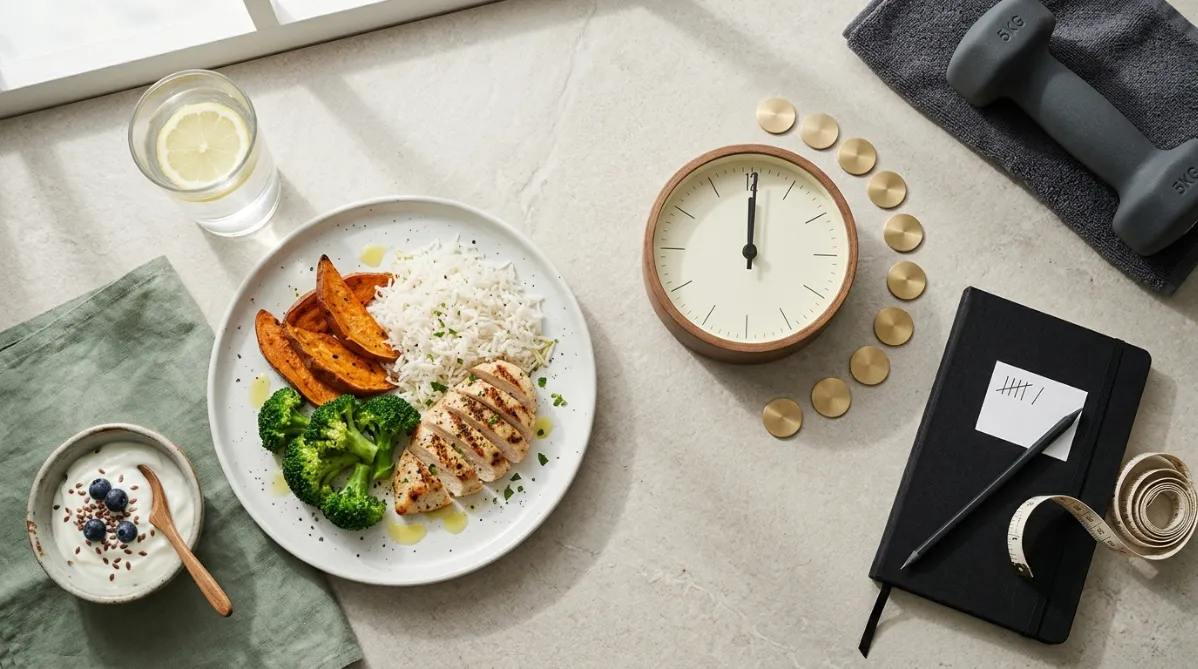
A wide, editorial-style flat lay photographed from above on a pale warm-gray stone surface, bathed in soft natural window light with gentle diagonal shadows. On the left side, a minimalist matte white ceramic plate holds a balanced bulking meal: sliced grilled chicken breast, a mound of fluffy basmati rice, roasted sweet potato wedges, and bright green broccoli, with a drizzle of olive oil glistening. Beside it sits a tall glass of water with a lemon slice and a small bowl of Greek yogurt topped with blueberries. On the right side, a round analog clock face is subtly placed, or a simple wooden clock with a minimalist design, its hands marking noon, with a soft arc of eight small brushed-brass discs arranged in a curved line beside it, suggesting an eight-hour eating window. A sleek black notebook with a pencil rests nearby, with a few hand-drawn tally marks and a tape measure loosely coiled next to it. A single dumbbell with a matte charcoal finish sits at the top right edge, partially cropped, hinting at strength training. The color palette is muted and sophisticated: sage green, warm cream, terracotta, soft charcoal, and touches of brass. Generous negative space on the right third for title text overlay. Shallow depth of field with crisp focus on the plate, subtle film grain, and a calm, modern wellness-magazine aesthetic reminiscent of contemporary health and fitness journals. Clean composition, natural textures like linen napkin and speckled ceramic, and no people or text visible.
nutrition

16:8-Fasten beim Bulking: Gleiche Muskelmasse, weniger als die Hälfte des Fettzuwachses

BY DR. GYMBRO ·

Kraftsportler, die ihr Bulking in ein 8‑Stunden‑Essfenster komprimierten, bauten genauso viel Muskel und Kraft auf wie Athleten, die regulär essen – jedoch mit weniger als der Hälfte des Fettzuwachses. Die Überraschung: Das Fasten selbst war nicht der Zaubertrick. Die 16:8‑Gruppe aß einfach weniger Kalorien als das geplante Plus, wodurch auch weniger Protein und Kohlenhydrate konsumiert wurden. Die 12‑wöchige randomisierte Studie legt nahe, dass zeitlich begrenztes Essen eher ein Hilfsmittel zur Einhaltung eines schlankeren Bulks ist, nicht ein metabolischer Hack. Im Folgenden finden Sie die Kennzahlen, das Protein‑Ziel, das Bestand hatte, und wer es ausprobieren sollte bzw. nicht.

This page is available in